
by Margaret Atwood
A review
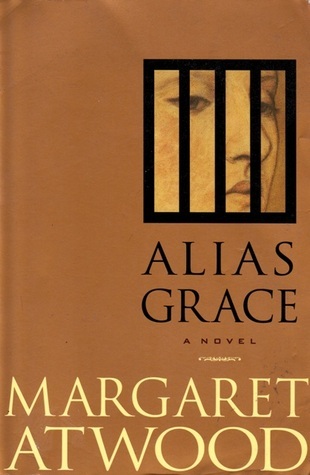
In November 1843 at a Toronto court, Grace Marks was tried and convicted as an accessory to the murder of her employer, Thomas Kinnear. She was sentenced to death, a penalty later commuted to life imprisonment, following pressure from various public groups, who pointed in mitigation to her extreme youth (she was fifteen!) at the time of the crime. Others believed she was insane.
Grace spent 28 years and 10 months in jail before being pardoned and released. She vanished from the public record and was never heard of again.
That Grace Marks was guilty after the fact was clear. She had fled with her supposed paramour Robert McDermott after the murder and crossed the border to the US, where they were arrested together. But had she conspired with him to commit murder? McDermott had pulled the trigger of the gun that killed Kinnear; he was hanged. Grace had undoubtedly been there but was she an innocent bystander or a participant? Also murdered that same day was Nancy Montgomery, Kinnear’s housekeeper and possible lover. She was found in the cellar of the house with evidence that Grace had taken part in the killing. The Montgomery murder was never tried; having obtained the conviction for the murder of Kinnear, the state apparently found it unnecessary to proceed.
Round these macabre events, Margaret Atwood has constructed a brilliant novel which puts new life into the characters depicted in court records and in newspaper reports of the day. She has drawn also from a work by Susannah Moodie, and English-born writer of both fiction and memoir, who wrote about the Marks case with great melodramatic flourishes.
In Alias Grace, Atwood introduces new characters into the drama. The chief male protagonist is Dr Simon Jordan, a psychiatrist who visits Grace in prison and gives her the opportunity to tell the story of her early life in Ireland and her family’s migration to Canada, as well as her account of the events leading up to the murders. Giving Grace a first-person voice brings the novel alive as we catch glimpses too of her experiences as a servant, including her friendship with fellow housemaid Mary Witney and the latter’s pregnancy and death. The personality of Mary eventually becomes an alter ego for Grace herself, a complication often cited in assessments of her “insanity”.
Others who populate this 1996 novel are the enigmatic Jeremiah, initially a pedlar who takes multiple roles in the later chapters of the book, McKenzie, Marks’s lawyer and Jamie Walsh, Kinnear’s stable-boy. who is awarded a surprising role as what I would call a literary “device”. Lesser roles are taken by the governor of the penitentiary and his family, by Marks’s lawyer (also fictional) McKenzie, and by assorted clergymen and entusiasts of hypnotism and spiritualism.
Margaret Atwood explore several themes which give us an insight into 19th century life and attitudes, in particular early medical ideas about the mind, psychiatry and multiple personality diosorder as well as hypnotism and spiritualism. While not offering us a happy-ever-after ending to Alias Grace, the author does come close by inventing a surprising but satisfying resolution to Grace’s post-prison wanderings.
For me, Alias Grace is Margaret Atwood at her best, every bit as deserving of a Booker prize as The Testaments (which got one) and The Handmaid’s Tale (which didn’t).
The late Hilary Mantel wrote an excellent article on Alias Grace in a 1996 Literary Review. https://literaryreview.co.uk/a-realist-with-wings
****
 Magda Green Books